Trophy season
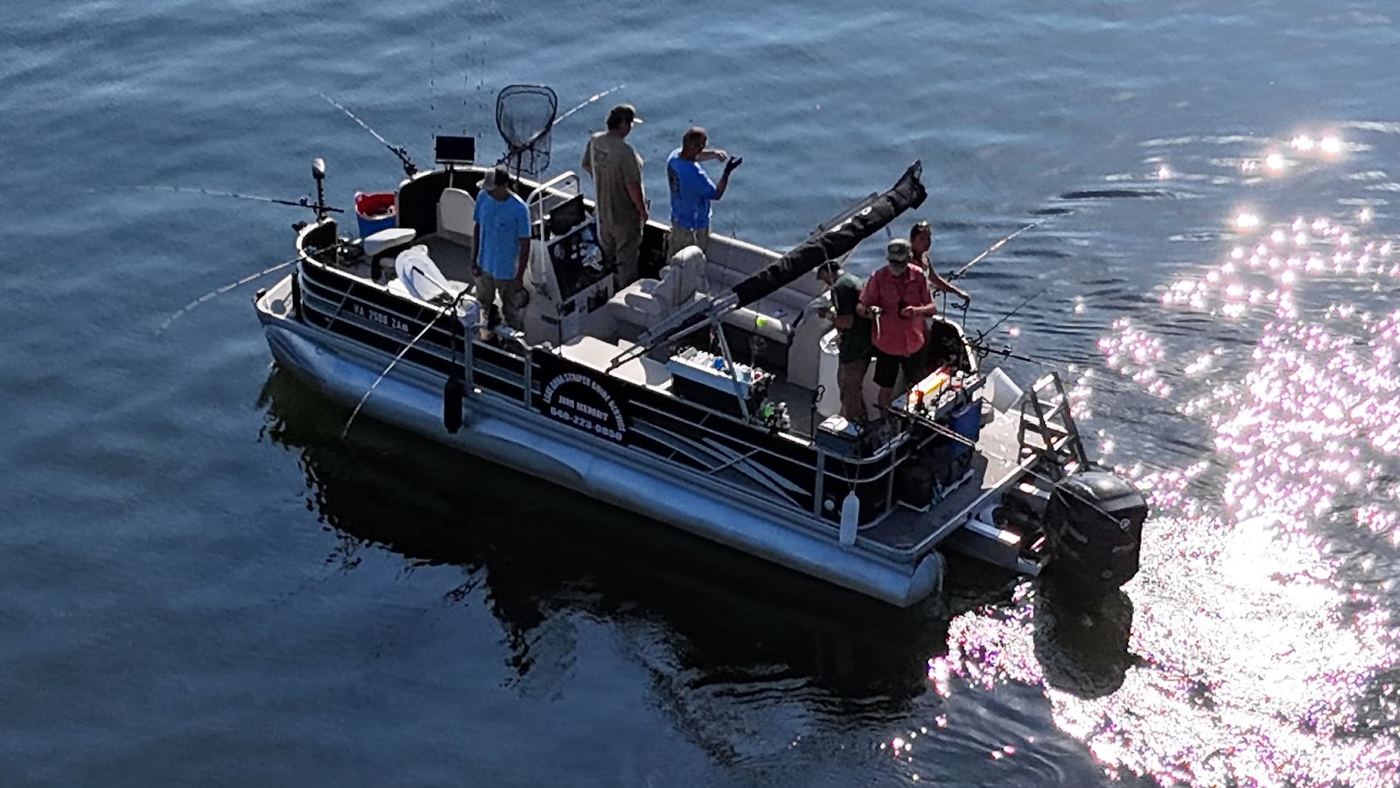
The fish are shallow and feeding before the spawn, so it's a good chance at a trophy striper. Jim runs 8 to 10 planer boards, a bobber and a couple of downlines with big gizzard shad.
Stripers move with the water temperature and the bait. Here's how Jim fishes the lake from March through the depths of winter.
The fish are shallow and feeding before the spawn, so it's a good chance at a trophy striper. Jim runs 8 to 10 planer boards, a bobber and a couple of downlines with big gizzard shad.
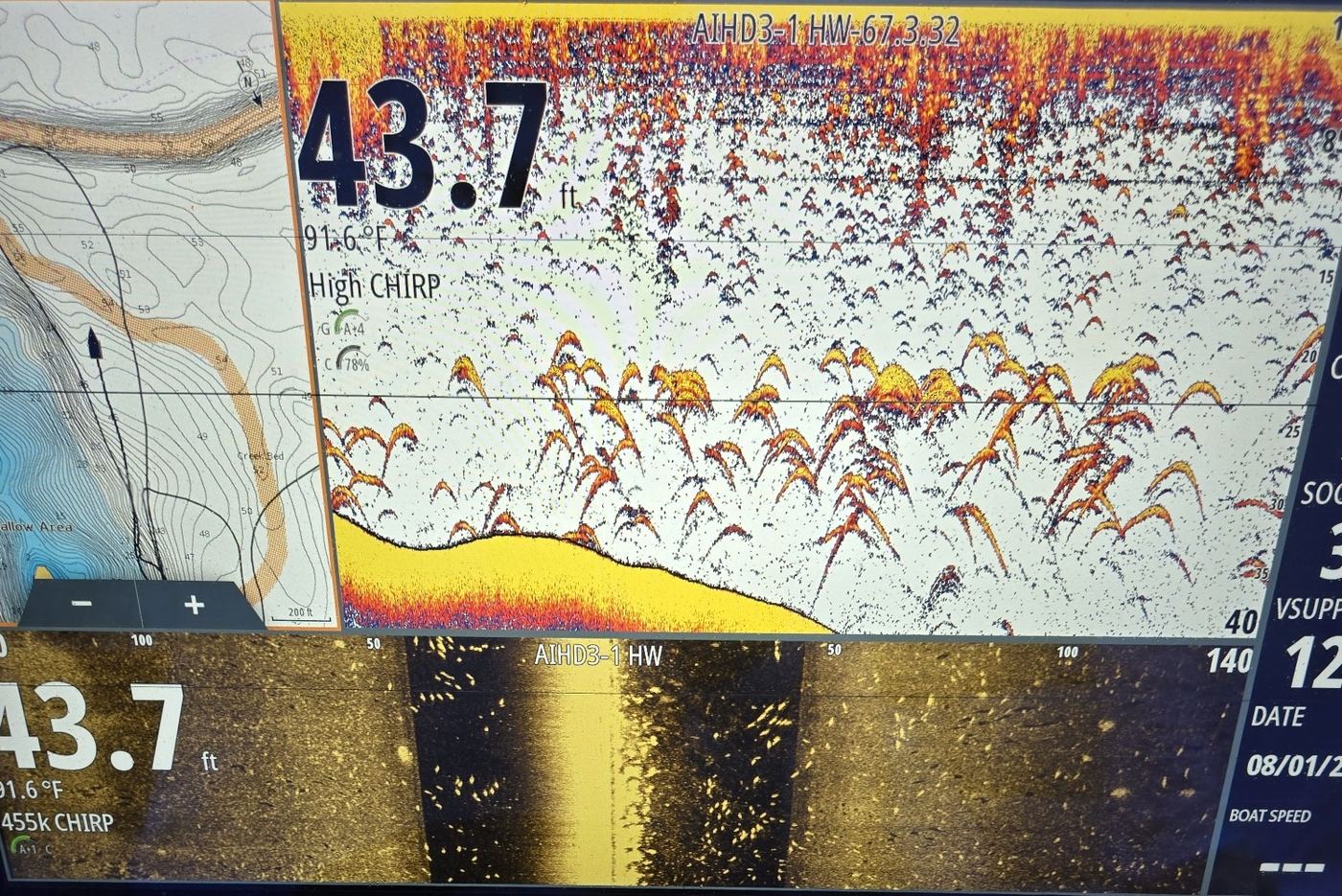
Fish can be shallow early in the month (or the day) and deep later. Jim covers about 80 yards wide and top to bottom, with as many as 15 baits in the water at once.
Traditionally the best time to catch lots of 5 to 10 pound stripers, and many mornings bring 50 to 100 fish. Ten downlines with blueback herring imitate a school of baitfish. In July, low-light topwater can be great. Bring at least four people.
Stripers move between deep, cooler water and shallow water where there may be more oxygen. Jim trolls, runs herring and gizzards on downlines when the fish are deep, and switches to boards when they go shallow.
Stripers follow schools of baitfish up the creeks and rivers and feed on big gizzards. Jim works the upper water column with boards and freelines.
Stripers move to the main lake, from the splits down to the dam. Jim uses smaller baits on boards in low light and downlines in bright sun, and casts swimbaits in the shallows. Once he finds a school, he jigs spoons and flukes. In winter, the next fish could be a hog.
“If there is one predominant factor that influences a fish to eat, and will encourage a striper to strike, it is the presence of his natural food source, in its natural setting, presented to the fish in a natural way.”
Moon phase, fronts, water temperature, clarity and boat traffic all matter, but nothing puts fish in the boat like the bait stripers eat every day.
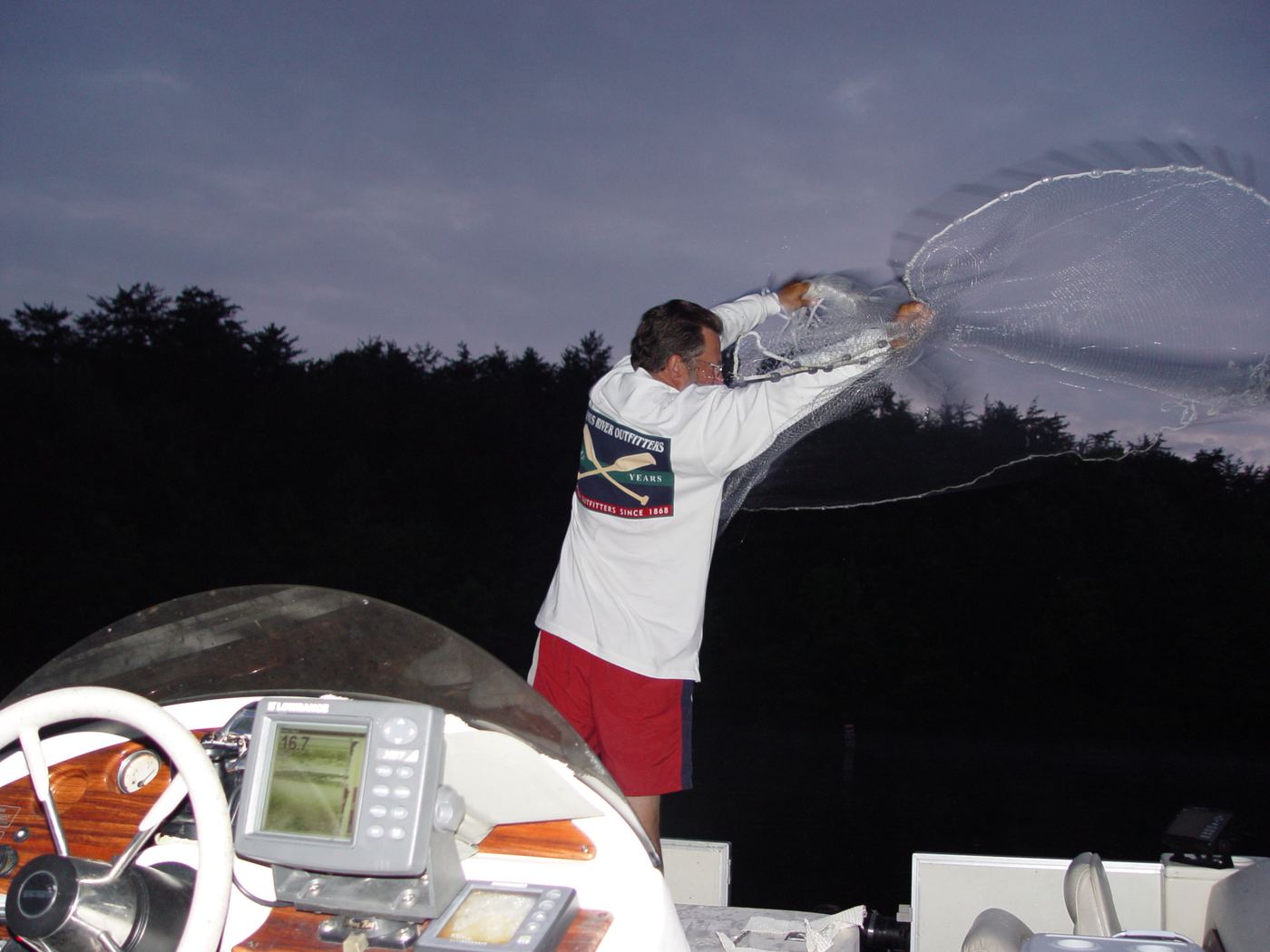
The summer workhorse. Herring trips start in the dark, with lights hung to draw the bait in, and Jim wants at least 200 herring in the tank to start a summer morning.
Big baits for big fish in spring and fall. The crew catches them just before and after daybreak, starting with about 40 and catching more through the day.
One of the three baits Lake Anna stripers feed on. None of them are sold in stores, so an angler has to go out and catch them.
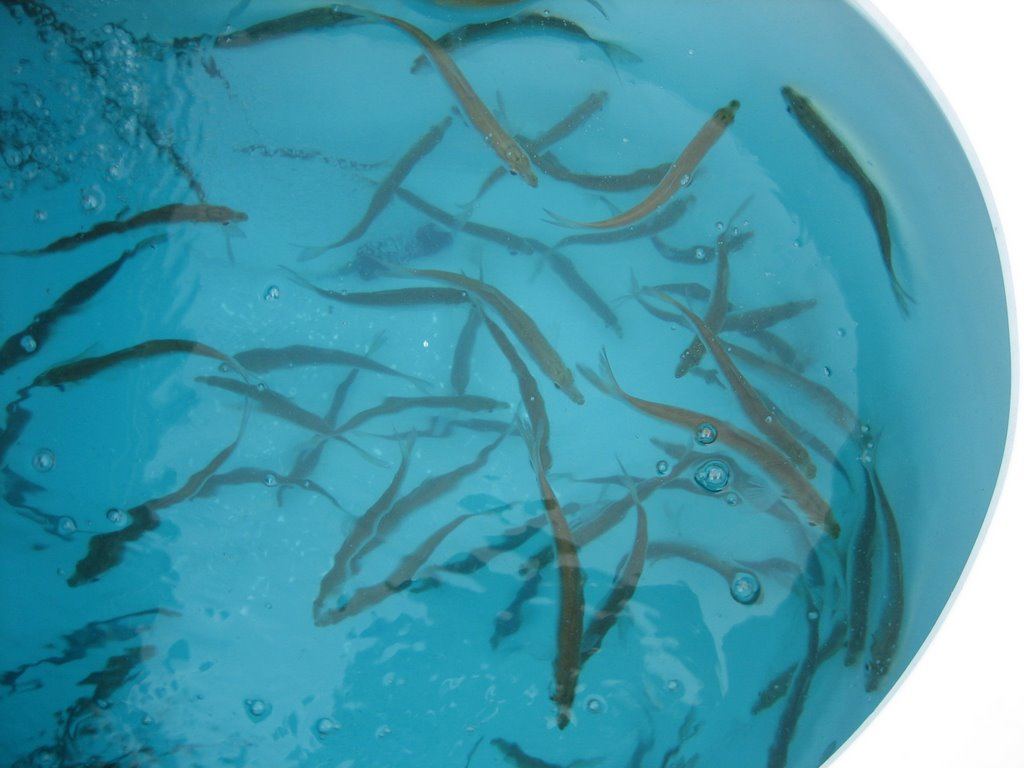
Herring and gizzard shad are some of the most sensitive baitfish there are. Jim keeps them in round tanks with good circulation and filtration, cool water and the right treatments, and never overcrowds them. When bait is hard to catch, the crew catches it the day before and holds it overnight at the shop.
bait tanks
gallons of bait water
on the water before pickup on herring trips
 Book a morning on the water
Calendars fill up in the busy months. Call or text Jim to check dates. He'll set the departure time for the season.